
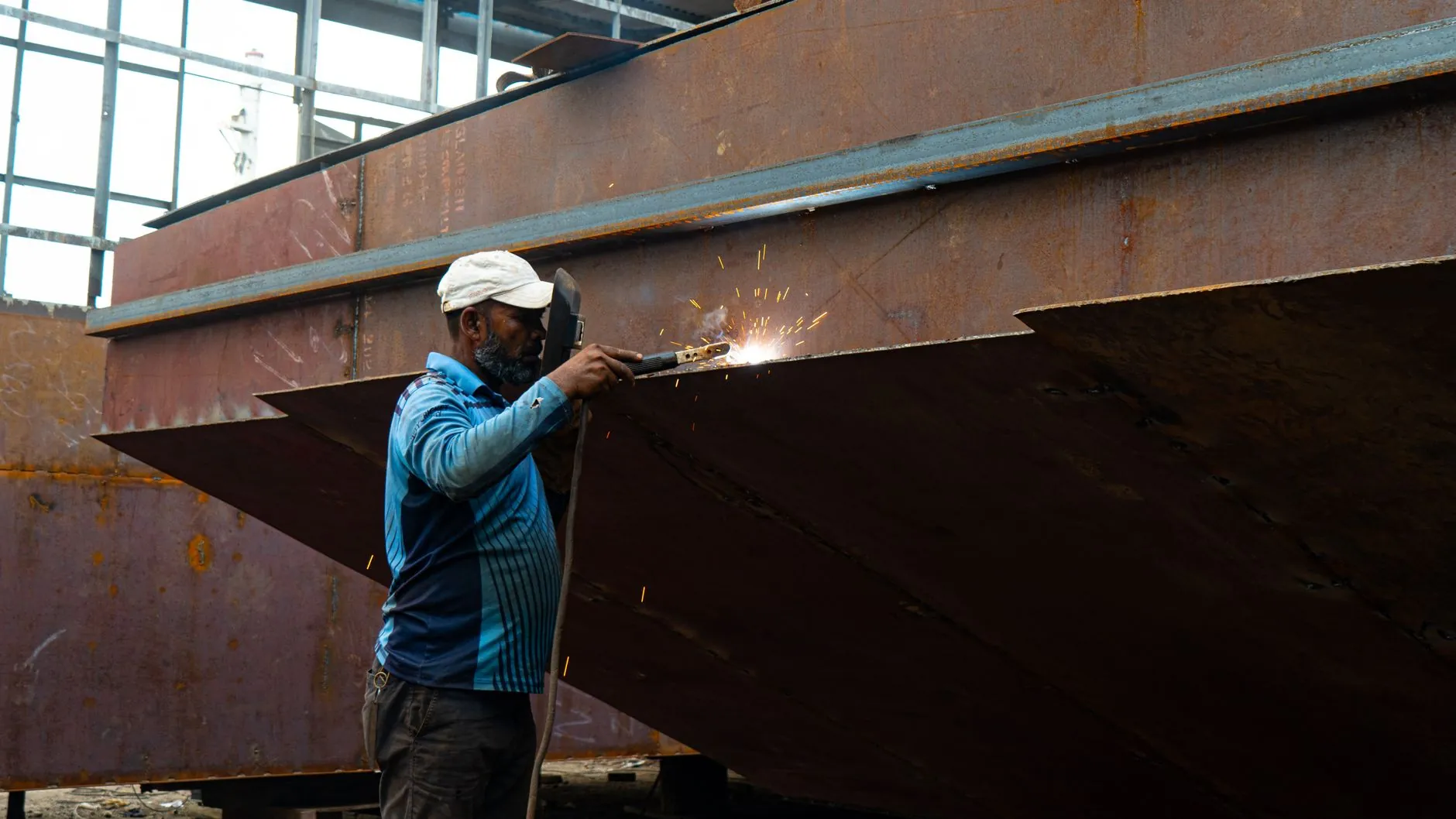
A welder working on a large steel structure, sparks falling.

Safety

How the crew works inside your gate

Marine repair happens in other people's yards and plants. The way a contractor behaves inside them is part of the service, not a page of promises attached to it.

Practice

Six things the crew works to

Written as practice rather than as policy, because a policy document nobody on the job has read protects nobody.

01

The site's rules come first

Every yard, dock and plant has its own induction, permit system and entry requirements. Ours do not override them. Where the two differ, the stricter one applies.
02

Hot work is permitted work

Cutting, welding and grinding aboard a vessel or inside a plant happen under the site's hot work permit, with the area checked before and watched after.
03

Isolation before work

Machinery is isolated and proven dead before it is opened. This is the first thing that gets skipped under schedule pressure and the first thing that hurts somebody.
04

Confined spaces

Tanks, voids and machinery spaces are entered under the site's confined space procedure, with the entry logged and someone outside it.
05

Work at height and lifting

Staging, access and lifting arrangements are agreed with the yard or plant before the crew starts, not improvised around whatever is on hand.
06

If it is not safe, it stops

A crew that stops work and calls it in costs a day. The alternative costs more than a day.

Deliberately absent

No safety statistics are published here

No incident rate, no hours worked without a lost time injury, no safety management certificate. None of it has been measured, recorded and signed off, so publishing any of it would be a decoration rather than a fact. If your tender requires a specific certification, ask before you shortlist us.

Send your site rules with the enquiry

Induction requirements, permit systems and PPE standards. It is faster to work to them from the first day than to discover them at the gate.